Vancouver SEO: Search Behavior Across Metro Vancouver and the Lower Mainland

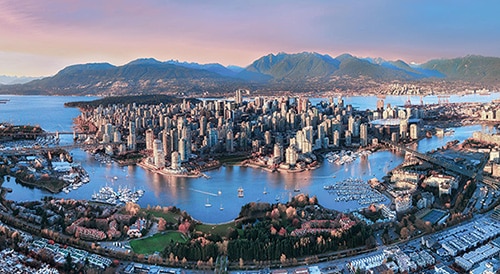
Vancouver, Greater Vancouver, Metro Vancouver, Lower Mainland. Plus North Van, West Van, East Van, and a dozen separate municipalities people often think of as "Vancouver." A guide to local search behavior in one of Canada's most fragmented urban search landscapes.
Vancouver might be the most geographically confused major search market in Canada. The city itself (the City of Vancouver, the actual municipality) is just one of more than twenty municipalities in Metro Vancouver. Locals routinely use “Vancouver” to mean any of three or four different geographic frames depending on context, and “North Vancouver,” “West Vancouver,” and “East Vancouver” mean three completely different things, only one of which is technically a separate city.
Search behavior in this market reflects all of that. The keyword strategy that takes the geographic complexity seriously outperforms the strategy that treats Vancouver as a single target.
What “Vancouver” actually means in search
Five distinct interpretations show up regularly.
Vancouver as the City of Vancouver proper. The actual municipality. Population around 660,000. Bounded by the ocean to the west, Burrard Inlet to the north, and the cities of Burnaby and Richmond to the east and south. When locals say “Vancouver,” they often mean specifically this municipality.
Vancouver as East Van versus West Side. Within the city of Vancouver, the Cambie Street corridor splits the city into East Van (working-class, increasingly gentrifying) and the West Side (more affluent, residential). Real distinction that locals use. East Van and West Side are functionally different submarkets with distinct search behavior.
Vancouver as Greater Vancouver / Metro Vancouver. The broader urban region. Includes Burnaby, Richmond, Surrey, Coquitlam, Port Coquitlam, Port Moody, North Vancouver (city and district), West Vancouver, Delta, Maple Ridge, Pitt Meadows, New Westminster, Langley (city and township), White Rock, Bowen Island, Anmore, Belcarra, Lions Bay. When non-locals say “Vancouver,” they often mean some version of this.
Vancouver as the Lower Mainland. Even broader. Includes everything in Metro Vancouver plus the Fraser Valley out to Chilliwack. More common in regional context, weather, traffic, real estate.
Vancouver as the Sea-to-Sky corridor. Sometimes informally extended to include Whistler and Squamish, especially in tourism, real estate, and outdoor industries.
For a service business, the question of which “Vancouver” you’re targeting determines the content strategy.
Neighborhood-level search behavior
Within the City of Vancouver proper, neighborhood-level searches are substantial.
- Yaletown. Downtown high-rise district. Premium positioning, professional and condo demographics.
- Mount Pleasant. Increasingly hip, restaurant and creative-class density.
- Kitsilano (or “Kits”). Beach-adjacent, affluent residential.
- Gastown. Historic downtown district, tourism plus increasingly business.
- Commercial Drive (or “The Drive”). East Van’s main commercial spine, distinct identity.
- Main Street. Central artery, distinct neighborhood identity, restaurant and retail concentration.
- Mount Pleasant, Fairview, South Granville, Marpole: each its own search behavior pocket.
Businesses serving specific neighborhoods often optimize for the neighborhood name plus service term, capturing searches that the broader Vancouver query wouldn’t.
The municipal confusion
The biggest source of search confusion in this market is that several names that sound like Vancouver neighborhoods are actually separate municipalities.
- North Vancouver is two municipalities (the City of North Vancouver and the District of North Vancouver), both north across Burrard Inlet from Vancouver proper. Not part of Vancouver.
- West Vancouver is its own municipality, west across Burrard Inlet. Not part of Vancouver.
- East Vancouver is a region within the City of Vancouver. Part of Vancouver.
This means “North Van plumber” and “Vancouver plumber” are different markets entirely, with different competitive landscapes, even though many searchers don’t realize the distinction.
Other major separate municipalities often grouped colloquially with Vancouver:
- Burnaby. East of Vancouver, large city, substantial commercial activity.
- Richmond. South of Vancouver, large Asian-Canadian population, distinct commercial and cultural character.
- Surrey. Southeast, fastest-growing city in BC, large and increasingly diverse.
- Coquitlam and the Tri-Cities (Coquitlam, Port Coquitlam, Port Moody).
- Delta, Langley, White Rock.
For a business with a service area covering multiple of these municipalities, each is its own search market, with its own competitive landscape and its own set of locally relevant content opportunities.
Variations and edge cases
- Van as shorthand. Limited but real, mostly informal contexts.
- YVR as code, primarily airport context but occasionally used colloquially.
- BC disambiguation. “Vancouver BC” specifically distinguishes from Vancouver, Washington, which has its own significant population.
- Lower Mainland as regional framing. Common in news, real estate, weather. Some commercial categories use it.
- Pacific Northwest (PNW) framing. Some categories blur Vancouver with Seattle and Portland for regional positioning. Mostly tourism, food, outdoor.
What the volume actually looks like
Real Keyword Planner data, Canada targeting, May 2026. We’re using “dentist [area]” as the sample query because dentists exist anywhere there’s population, which makes the cross-area variation a read on search behavior rather than something specific to the industry. We don’t specialize in dental SEO. The same shape holds for plumber and roofer at different absolute numbers.
![Choropleth map of Metro Vancouver municipalities tinted by Google search volume for "dentist [area]". Vancouver dominates but Surrey, Langley, and New Westminster each pull 2,400/mo, Burnaby 1,600, North Van and Coquitlam 1,300 each, with substantial volume continuing across Maple Ridge, Pitt Meadows, Richmond, and the Tri-Cities.](/images/cities/vancouver-search-heatmap.svg)
| Query | Avg monthly searches |
|---|---|
| dentists vancouver | 2,900 |
| dentist surrey bc | 2,400 |
| dentist langley | 2,400 |
| dentist new westminster | 2,400 |
| dentist burnaby | 1,600 |
| dentist north vancouver | 1,300 |
| dentist coquitlam | 1,300 |
| dentist maple ridge | 1,000 |
| dentist pitt meadows | 880 |
| dentists richmond bc | 480 |
| dentists port coquitlam | 480 |
| dentists port moody | 480 |
| dentists west vancouver | 390 |
| dentist white rock | 320 |
| dentist kitsilano | 260 |
| dentist delta bc | 70 |
| dentist gastown | 40 |
| dentist greater vancouver | 0 |
| dentist metro vancouver | 0 |
| dentist lower mainland | 0 |
This is the most striking dataset across any Canadian market we’ve looked at. Vancouver itself pulls 2,900/mo for dentist queries. Surrey, Langley, and New Westminster each pull 2,400. Burnaby pulls 1,600. North Vancouver and Coquitlam each pull 1,300. Maple Ridge runs 1,000, Pitt Meadows 880. Richmond, Port Coquitlam, and Port Moody each pull 480. The volume is genuinely distributed across the region, not concentrated in the city of Vancouver.
A business optimizing only for “Vancouver” in this region misses more search volume than it captures. The other municipalities are comparable markets in their own right.
The other half of the table is the inverse. “Greater Vancouver,” “Metro Vancouver,” and “Lower Mainland” all return zero across dentist, plumber, and roofing exact-match volume. The regional designations exist for media, government, and real-estate framing, not for service queries. A page titled “Greater Vancouver Plumber” is targeting a query that doesn’t really get typed.
Plumber follows the same shape with bigger numbers (Vancouver 4,400, Surrey 2,400, Coquitlam 1,900, Burnaby 1,600, North Van 1,300, Langley 1,300, West Van 390). Roofing is more compressed and concentrated in Vancouver proper.
What this means for local SEO in Vancouver
Practical takeaways for businesses serving this market.
Be explicit about what “Vancouver” means for your business. A page titled “Vancouver Plumber” might serve only the City of Vancouver, or all of Metro Vancouver, or specifically downtown. Make the actual coverage clear, both for SEO targeting and for visitor expectations.
Build dedicated pages for the major separate municipalities you serve. Burnaby, Richmond, Surrey, Coquitlam, North Vancouver, West Vancouver. Each is its own market. A boilerplate “we serve all of Metro Vancouver” without specific content for each underperforms.
Treat North Van as a separate market from Vancouver. This is a specific trap. The City of Vancouver and the City/District of North Vancouver are different municipalities with different markets. Optimizing as if they’re the same hurts both.
Neighborhood-level content captures real volume in the city proper. Yaletown, Kitsilano, Mount Pleasant, Gastown, Commercial Drive, Main Street. Each warrants consideration for businesses with genuinely neighborhood-specific positioning.
Watch the GVR / Metro Vancouver / Lower Mainland framing. “Greater Vancouver SEO” returns different results from “Vancouver SEO” returns different results from “Lower Mainland SEO.” Pick the framing that matches the business’s actual reach and write to it.
Consider Asian-language search opportunities. Vancouver, Richmond, and Burnaby have substantial Mandarin and Cantonese-speaking populations. Multilingual content is a meaningful opportunity for businesses serving these communities, more so than in most Canadian markets.
For the broader local SEO framework that applies to any market, see our local SEO guide.
How we approach Vancouver SEO at SEO Brothers
Vancouver campaigns get built municipality by municipality. Real Burnaby content. Real Surrey content. Real Richmond content. North Van and West Van treated as the separate cities they are, not Vancouver neighborhoods. Where the business genuinely serves a specific neighborhood inside the city of Vancouver (Yaletown, Kitsilano, Mount Pleasant, Gastown), we add neighborhood-level content with real local references rather than a city name swapped into a template.
The biggest unlocks we usually find: the dedicated Surrey or Burnaby page that captures the volume Vancouver alone can’t, and the honest decision about whether the business genuinely serves that municipality before building content for it.
If you’re a business or agency anywhere in Metro Vancouver, get in touch and we’ll walk through what works in your specific market.
White-label SEO for agencies serving Vancouver
If you’re an agency with a client anywhere in Metro Vancouver, we run this same playbook under your brand. You keep the client, the pricing, and the margin, while we handle the research, the separate municipality pages for Surrey, Burnaby, and Richmond, and the reporting behind the scenes. That’s our white-label SEO model, and it covers the full program, not just links.
How to choose an SEO company in Vancouver
People ask us who they should hire for SEO in Vancouver, and it's a fair question. The field is a mix of strong local specialists, generalist marketing shops that dabble in search, and the occasional out-of-town outfit that has never worked the market.
We're a white-label team that works behind agencies, so we don't compete for Vancouver clients ourselves. That lets us grade the field on signals you can actually verify. We won't ding anyone for not ranking number one for "Vancouver SEO" themselves either, plenty of good shops (us included) don't chase it. What matters is whether other businesses trust them, whether there's real authority behind the pitch, and whether they'll tell you straight what you're paying for. Each company is scored out of 20 on five signals.
Clutch & third-party ratings
The closest thing the agency world has to a verified report card. A strong positive signal, but a weak negative one, plenty of good firms never bother with a profile.
Client reviews
Google review count and rating. Volume matters as much as the star average.
Authority
Backlink profile and Domain Rating (we read these in Ahrefs). Real off-site strength behind the words.
Track record & results
Years in the market and named case studies you can actually check.
Transparency
Published pricing or process, a named team, a real way to reach a human.
Scored from public signals as of June 2026: Clutch, Google reviews, Ahrefs Domain Rating, and each firm's own site. See the five signals above.
Salt Water Digital
Tops the market on Google reviews (132 at 5.0) and authority (DR 65), with a named 14-person team. Its Clutch profile sits unused and it publishes no pricing.
Guaranteed SEO
Nearly 30 years in the market with real case studies and a named team. Only two Clutch reviews and a slightly lower Google rating keep it off the top.
Evolve Branding
A large named team and a huge Google review base (335), but more a branding shop than a pure SEO firm, with modest authority and an empty Clutch profile.
Optimized Webmedia
The best-verified Clutch profile in the city (5.0 from 15 reviews) and strong Google reviews, but names no team and publishes no pricing.
OptiRank SEO Agency
Good Google reviews, but little else to verify: no Clutch profile, no named team, no founding date, and no published pricing.
The shops at the top earn it on outside signals that line up: strong Clutch and Google reviews, real links, and pricing you don't have to chase. Nobody paid to be on this list, and nobody paid to rank higher on it.
Choosing an SEO company?
Run those five checks on anyone you talk to, in Vancouver or anywhere. Clutch, reviews, real links, verifiable results, and straight answers on pricing tell you more than a sales call will.
Read the local SEO framework →Run an agency in Vancouver?
Have the SEO behind your brand handled by a team that lives in this work, white-label and under your name. That's our actual job.
Partner with usGet our guides in your inbox
Pick what you want to hear about. No spam, unsubscribe anytime.
Check your inbox to confirm your subscription.